Tuesday, November 4, 2008

Today is the Feast of


St Charles Borromeo


Courtesy of Catholic Online

Charles was the son of Count Gilbert Borromeo and Margaret Medici, sister of Pope Pius IV. He was born at the family castle of Arona on Lake Maggiore, Italy on October 2. He received the clerical tonsure when he was twelve and was sent to the Benedictine abbey of SS. Gratian and Felinus at Arona for his education.

In 1559 his uncle was elected Pope Pius IV and the following year, named him his Secretary of State and created him a cardinal and administrator of the see of Milan. He served as Pius' legate on numerous diplomatic missions and in 1562, was instrumental in having Pius reconvene the Council of Trent, which had been suspended in 1552. Charles played a leading role in guiding and in fashioning the decrees of the third and last group of sessions. He refused the headship of the Borromeo family on the death of Count Frederick Borromeo, was ordained a priest in 1563, and was consecrated bishop of Milan the same year.

Before being allowed to take possession of his see, he oversaw the catechism, missal, and breviary called for by the Council of Trent. When he finally did arrive at Trent (which had been without a resident bishop for eighty years) in 1556, he instituted radical reforms despite great opposition, with such effectiveness that it became a model see. He put into effect, measures to improve the morals and manners of the clergy and laity, raised the effectiveness of the diocesan operation, established seminaries for the education of the clergy, founded a Confraternity of Christian Doctrine for the religious instruction of children and encouraged the Jesuits in his see. He increased the systems to the poor and the needy, was most generous in his help to the English college at Douai, and during his bishopric held eleven diocesan synods and six provincial councils. He founded a society of secular priests, Oblates of St. Ambrose (now Oblates of St. Charles) in 1578, and was active in preaching, resisting the inroads of protestantism, and bringing back lapsed Catholics to the Church. He encountered opposition from many sources in his efforts to reform people and institutions.

He died at Milan on the night of November 3-4, and was canonized in 1610. He was one of the towering figures of the Catholic Reformation, a patron of learning and the arts, and though he achieved a position of great power, he used it with humility, personal sanctity, and unselfishness to reform the Church, of the evils and abuses so prevalent among the clergy and the nobles of the times. His feast day is November 4th.

Yesterday Was the Feast of...


St Martin de Porres

It is ironic that on election day in the US, when a black man could be voted in to become "the most powerful man in the world", to contrast the attitudes and values he espouses with that of St Martin de Porres, who would, without doubt, condemn Obama for his enthusiasm for infanticide, as demonstrated by his commitment to sign the Freedom of Choice Act as soon as he can and his shocking refusal to support the Born Alive Infants Act in the Senate, a bill that even pro-choice societies supported. While many of us wish for a Catholic president or a Catholic PM, one wonders whether it is good for a Catholic to be so powerful. The great humility of the Saints was that they sought not earthly power, knowing in their hearts, that our Blessed Lord, "although he existed in the form of God, did not deem equality with God something to be grasped, but emptied Himself, taking the form of a servant and being made in the likeness of God."

For the full biography of St Martin de Porres, click here.

Martin had great charity for friend and foe, and his love for animals was comparable to that of St. Francis of Assisi. Race, color or creed did not matter to our saint; his first thought was to help others in any way that he could; be it giving them food or money, binding their wounds, or giving them sound spiritual or practical advice – no act of charity was left undone. Since his youth, Martin had learned to be humble. And in the monastery, he humbled himself; always taking the lowest place and never defending himself. At a time when everyone knew about Martin's holiness, and the most prominent ecclesiastics and laymen begged him for advice, a fellow religious asked him, "Brother Martin, would it not be better for you to remain in the house of his Excellency, the Archbishop of Mexico, rather than stay here cleaning the toilets of the monastery?" Without hesitation he replied, using the words of King David: "I have chosen to be an abject in the house of my God." Psalm: 83; 11.

St Martin de Porres, pray for the soul of America, for America's souls, the unborn and for all of us.

Monday, November 3, 2008

TV Programme on Jake Thackery

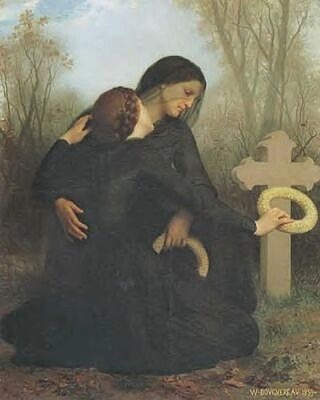
Pope Benedict XVI on All Souls Day


Courtesy of Catholic Online

On the day on which the Church commemorates all of the faithful departed, Benedict XVI has asked Christians to "evangelize the reality of death and of eternal life, a reality particularly subject to superstitious beliefs and syncretism, so that Christian truth does not risk being blended with mythologies of various kinds." Speaking before the prayer of the Angelus, to the pilgrims gathered in St. Peter's Square, he said that "it is very important that we Christians live a relationship with the departed in the truth of the faith, and that we look at death and the next world in the light of Revelation." In support of this, he cited the words of St. Paul, who said "not to be sad like those who have no hope," and "if in fact we believe that Jesus has died and risen, so also God, through Jesus, will gather with him all those who have died" (1 Thes. 4:13-14).

The pontiff recalled that eternal life was one of the themes of his encyclical "Spe Salvi." "I asked: is the Christian faith also for the men of today a hope that transforms and upholds their life (cf. no. 10)? And more radically: do the men and women of our age still desire eternal life? Or has earthly existence become their only horizon? In reality, as St. Augustine observed, we all want 'the blessed life', happiness. We do not know very well what this is, but we feel drawn to it. This is a universal hope, common to the men of all times and places. The expression 'eternal life' is intended to give a name to this irrepressible expectation: not an endless succession, but immersion in the ocean of infinite love, in which time, before and after, no longer exist. A fullness of life and joy: this is what we hope for and anticipate from our being with Christ (cf. no. 12)."

Before the Marian prayer, the pontiff exhorted all to renew their "hope in eternal life, solidly founded in the death and resurrection of Christ. 'I am risen, and now I am always with you', the Lord tells us, 'and my hand upholds you. Wherever you might fall, you will fall into my hands, and I will be present even at the gate of death. Where no one can accompany you any longer, and where you can bring nothing, there I will wait for you to transform your darkness into light'."

"Christian hope," the pope concluded, "is not, however, an individual hope, it is always hope for others as well. Our existence is profoundly connected to that of one another, and the good and evil that each one does always affects the others. Thus the prayer of a pilgrim soul in the world can help another soul that is being purified after death. This is why the Church calls upon us to pray for our deceased loved ones, and to visit their graves. May Mary, the Star of Hope, make our hope in eternal life stronger and more authentic, and support our prayers for our departed brethren."

At 6:30 Sunday evening, the pope will visit the crypt of the Vatican basilica for a moment of prayer in private, on behalf of the Supreme Pontiffs buried there, and of all the departed. Tomorrow, he will celebrate a Mass for all of the cardinals and bishops who died this year

All Souls Day


May the souls of the Faithful Departed, through the Mercy of God, Rest In Peace.

Eternal Father, I offer Thee the Most Precious Blood of Thy Divine Son, Jesus, in union with the Masses said throughout the world today, for all the holy souls in purgatory, for sinners everywhere, for sinners in the universal Church, those in my own home and within my family. Amen. ~ Prayer of St Gertrude for the Souls in Purgatory

Sunday, November 2, 2008

St Bernard de Clairvaux on Devotion to the Saints


Why should our praise and glorification, or even the celebration of this feast day mean anything to the saints? What do they care about earthly honors when their heavenly Father honors them by fulfilling the faithful promise of the Son? What does our commendation mean to them? The saints have no need of honor from us; neither does our devotion add the slightest thing to what is theirs. Clearly, if we venerate their memory, it serves us, not them. But I tell you, when I think of them, I feel myself inflamed by a tremendous yearning.

Calling the saints to mind inspires, or rather arouses in us, above all else, a longing to enjoy their company, so desirable in itself. We long to share in the citizenship of heaven, to dwell with the spirits of the blessed, to join the assembly of patriarchs, the ranks of the prophets, the council of apostles, the great host of martyrs, the noble company of confessors and the choir of virgins. In short, we long to be united in happiness with all the saints. But our dispositions change. The Church of all the first followers of Christ awaits us, but we do nothing about it. The saints want us to be with them, and we are indifferent. The souls of the just await us, and we ignore them.

Come, brothers, let us at length spur ourselves on. We must rise again with Christ, we must seek the world which is above and set our mind on the things of heaven. Let us long for those who are longing for us, hasten to those who are waiting for us, and ask those who look for our coming to intercede for us. We should not only want to be with the saints, we should also hope to possess their happiness. While we desire to be in their company, we must also earnestly seek to share in their glory. Do not imagine that there is anything harmful in such an ambition as this; there is no danger in setting our hearts on such glory.

When we commemorate the saints we are inflamed with another yearning: that Christ our life may also appear to us as he appeared to them and that we may one day share in his glory. Until then we see him, not as he is, but as he became for our sake. He is our head, crowned, not with glory, but with the thorns of our sins. As members of that head, crowned with thorns, we should be ashamed to live in luxury; his purple robes are a mockery rather than an honor. When Christ comes again, his death shall no longer be proclaimed, and we shall know that we also have died, and that our life is hidden with him. The glorious head of the Church will appear and his glorified members will shine in splendor with him, when he forms this lowly body anew into such glory as belongs to himself, its head.

Therefore, we should aim at attaining this glory with a wholehearted and prudent desire. That we may rightly hope and strive for such blessedness, we must above all seek the prayers of the saints. Thus, what is beyond our own powers to obtain will be granted through their intercession.


Brother John entered the'Monastery of Silence' and the Chief Priest said, "Brother, this is a silent monastery, you are welcome here as long as you like, but you may not speak until I direct you to do so."

Brother John lived in the monastery for five years before the Chief Priest said to him "Brother John,you have been here five years now, you may speak two words."

Brother John said, "Hard Bed."

"I'm sorry to hear that" the Chief Priest said.

"We will get you a better bed."

After another five years, Brother John was called by the Chief Priest.

"You may say another two words Brother John."

"Cold Food." said Brother John, and the Chief Priest assured him that the food would be better in the future.

On his 15th anniversary at the monastery, the Chief Priest again called Brother John into his office.

"Two words you may say today."

"I Quit." said Brother John.

"It is probably best." said the Chief Priest.

"You've done nothing but complain since you got here."