Tuesday, August 10, 2010

The Magnificent Seven


John Sturges was the master of stylish ensemble action flicks (Gunfight at the OK Corral, The Great Escape), and The Magnificent Seven (1960) is probably his best-remembered work. This heavily simplified remake of Akira Kurosawa's Seven Samurai boils the dense samurai film into a simple story of good, ultra-cool gunslingers saving noble peasants from evil bandits. As matinee entertainment it succeeds with flying colors.

A small Mexican village is being terrorized by the bandit Calvera (Eli Wallach), who demands payment in food and money every few months. After a visit from Calvera ends in bloodshed, the villagers decide to go to the US-Mexican border and buy guns - deciding to hire gunslingers instead. They quickly enlist the help of Chris (Yul Brynner) and Vin (Steve McQueen), who help them recruit five others - charming con Harry (Brad Dexter), mercenary Bernardo (Charles Bronson), knife-throwing Britt (James Coburn), eager newbie Chico (Horst Bucholz), neurotic quick-draw Lee (Robert Vaughn) - for surprisingly low pay. The gunslingers find themselves growing attached to the village and its friendly inhabitants, and when Calvera comes they have a nasty surprise waiting.

Straightforward and unpretentious, The Magnificent Seven is an easy film to like. Its gunslingers are the ultimate Western heroes; nominally mercenaries, they eschew pay to do the right thing, and certainly look good doing it. It plays almost as a rebuttal to Robert Aldrich's cynical Vera Cruz (1954), whose gringo gunsels went south of the border purely for money. Helped by a highly-quotable screenplay ("We deal in lead, friend!") and simple moral compass, it's definitely one of the most accessible, broadly appealing Westerns.

The movie's treatment of its gunslinger heroes is a mite schizophrenic. Sturges and writer William Roberts seem to want us to think that the life of a gunslinger ain't all it's cracked up to be. Unfortunately, this message is balanced out by the protagonists themselves. Ultra-stylish, quick on the draw and narcissistic (they perform before an audience whenever possible), they are the last word in movie cool. Charles Bronson's speeches about how the peasants are the real heroes rings false: nobody's paying to see wimpy Mexican farmers. The final lines - "Only the farmers have won. We lost." - are borrowed from Kurosawa, where they had real ressonance. Here, it's so much nonsense, especially with three sequels in the pipeline.

A bigger failing is the scattershot narrative. The movie plays as a collection of great set-pieces strung together by a fairly thin plot: characters are introduced strutting their stuff, cue dull exposition, doze off until big shootout, and so on. The story seems almost an afterthought, and enjoyable as it is the movie isn't terribly compelling or deep. If the film isn't the sum of its parts, though, its parts are entertaining enough to compensate.

Sturges's direction definitely elevates the film above standard genre fare. If nothing else, Sturges had a flair for action, and this movie has definitely got that. The shootouts are wonderfully staged and exciting, filmed with a very modern flair and style. Charles Lang's photography makes fine use of authentic Mexican locations. Elmer Bernstein's legendary score also deserves a mention, as one of the all-time great movie themes.

Just as surely as The Godfather, The Magnificent Seven was a star-making film: Yul Brynner and Eli Wallach were established stars, but the rest of the cast was languishing in B Movies and bit parts. Brynner is fine as the gang leader, and Wallach makes a fun, scenery-chewing bandit, rehearsing his Tuco from The Good, the Bad and the Ugly. Steve McQueen catapults himself from star of The Blob to instant screen legend.

The others are more hit-and-miss. Charles Bronson (Once Upon a Time in the West) gets one of his best roles, and James Coburn (Pat Garrett and Billy the Kid) defines laconic as the knife-tossing Britt ("You lost!"). Robert Vaughn (Bullitt) comes off better than most cowardly commando characters. Brad Dexter is saddled with a lame, useless character, and the monumentally-miscast Horst Bucholz (One, Two, Three) is just obnoxious. Perhaps it's little surprise why the latter two never achieved the fame of their counterparts.

Whatever its rough patches, The Magnificent Seven is perfectly fine entertainment. Its enduring popularity speaks for itself: few other Westerns are so broadly appealing and universally-liked.

The Feast of St Lawrence

It's my patron's feast today. Unfortunately, I have ill prepared for it. I've stupidly arranged for slate chippings to come to the Church at 10am, exactly when Mass starts, in order to top up the decorative slate arrangement on the Presbytery garden at St Mary Magdalen's...and...guess what? It is absolutely pissing it down with rain!

According to Wikipedia:

'In the persecutions under Valerian in 258 A.D., numerous priests and deacons were put to death, while Christians belonging to the nobility or the Roman Senate were deprived of their goods and exiled. Pope Sixtus II was one of the first victims of this persecution, being beheaded on August 6. A legend cited by St Ambrose of Milan says that Lawrence met the Pope on his way to his execution, where he is reported to have said, "Where are you going, my dear father, without your son? Where are you hurrying off to, holy priest, without your deacon? Before you never mounted the altar of sacrifice without your servant, and now you wish to do it without me?" The Pope is reported to have prophesied that "after three days you will follow me".

Lawrence is said to have been martyred on a gridiron as a part of Valerian's persecution. During his torture Lawrence cried out "This side’s done, turn me over and have a bite." ["Assum est, inquit, versa et manduca."]'

Personally, if I had been in St Lawrence's shoes at the time of his martyrdom, I don't think I would have said that. I would have said,

"Aaaaaaaggggghhhhh....You're going to pay for this! You baaaaaassssstaaarrrds!"

But then that is the difference between a great sinner and a great Saint.

St Lawrence, Martyr. Pray for us!

Saturday, August 7, 2010

New Statesman Claims Bellahouston Park Will Be Poorly Attended

Our Lord is behind him, but what of Scottish Catholics?
The New Statesman Online Magazine has claimed that the Holy Father has been 'snubbed' by Scottish Catholics, with a low attendance expected for the open-air Mass in Bellahouston Park...

'Controversy has broken out over the Pope's planned open-air Mass at Bellahouston Park, near Glasgow, with many parishes returning more than half of their allocated tickets for the event.


The organisers now reportedly fear that attendance will fall short of the 100,000 they expected to come to the Mass, which will cost £1.5m to stage. Each of Scotland's 450 Catholic parishes received a pro-rata ticket allocation based on the size of its regular congregation, but the Herald reports that, in some cases, only one-sixth of the parishioners are planning to take up their places at the papal event.


In 1982, Pope John Paul II celebrated Mass at the same site on a sunny afternoon, with 300,000 people in attendance. The choice of this site has been interpreted as an attempt to re-create the success and popularity of that service for a pope who has been under siege in recent months.


The open-air Mass requires participants to be in their places hours before the two-hour service begins, and it is thought that fears about the weather and long travel times are putting people off. Distant parishes are also planning to watch the service via video link, rather than travel to the other side of the country to attend in person.


The service, which will take place on 19 September during the Pope's state visit to Britain, has also reopened the debate over the cost of the papal trip to Britain. Although it insists that pilgrims will not have to pay to attend the Mass at Bellahouston, the Catholic Church has asked each parish to make a donation of £20 per attendee - an obligation that many parishes have passed on to their parishioners.


The total cost of the visit, which will be borne by Britain, as the host nation, provoked outrage in some quarters when it was revealed that it could exceed £20m. As well as asking for "voluntary donations" from the public to cover the cost of specific events, the Catholic Church is also asking members to donate towards the overall cost of the visit, which it currently estimates at £7m.


The Church is also selling merchandise to coincide with the trip. T-shirts, fridge magnets and mugs are available, as well as more conventional religious artefacts. Besides being hit by low attendance figures, the Pope's visit could suffer from a lack of television exposure, after BBC workers threatened to strike during that period (which will coincide with other major events such as the Last Night of the Proms) over pension disputes. Workers are being balloted on the issue; a result is expected in the week before the Pope is due to arrive in Britain.


Add to this the stated intention of Richard Dawkins and others to attempt to arrest the Pope for his alleged complicity in the child abuse scandal while he is on British soil, and we could be in for an eventful visit come September.'

Any initial thoughts on this report?

H/T Raymond Bell

Friday, August 6, 2010

Two Rode Together


This underseen oater is probably John Ford's most cynical Western. Coming in the midst of Ford's late-career revisionist period - right in between Sergeant Rutledge and The Man Who Shot Liberty Valance - Two Rode Together (1961) is a flawed but intriguing film that throws the moral ambiguity of frontier warfare into stark relief.

Guthrie McCabe (James Stewart) is the crooked Marshal of Tuscosa, Texas, who is dragooned by friend Cavalry Lieutenant Gary (Richard Widmark) into joining him. A group of settlers has lost family members to Quanah Parker's (Henry Brandon) band of Comanches, and McCabe and Gary are assigned to bring the captives back. They are successful, bartering the release of teenaged boy Running Wolf (David Kent) and Mexican woman Elena (Linda Cristal), wife of warrior Stone Calf (Woody Strode), but the situation is complicated by the fact that two are not quite willing to return to civilization. While the half-crazed Mrs. McCandless (Jeanette Nolan) desperately believes Running Wolf is her son, Elena falls for Guthrie, but finds herself outcast by the racist settlers.

Two Rode Together borrows many plot elements and set-pieces from Ford's The Searchers (1956), but is even more bitter and cynical. The Searchers left one major question unanswered in its rush for a pseudo-happy ending: Natalie Wood's Debbie initially refused to leave the Comanche, only to apparently change her mind. The question of whether she wanted to return, so intriguingly raised earlier in the film, is dropped. Here, Ford and writer Frank Nugent confront the issue head-on, and despite several patches of broad comedy, it's certainly Ford's darkest Western.

Historically, white captives taken by Indians often didn't want to return to civilization, preferring to stay with their adopted families. Both Elena and Running Wolf are highly reluctant to rejoin white society; whether Running Wolf is even white is unclear until the tragic denouement. This isn't even the most troubling issue raised: One settler (Willis Bouchey) tells McCabe it doesn't matter if the child he's "rescuing" is his own, so long as he can shut up his wife, and the McCandlesses adopt Running Wolf out of misguided desperation. Even when Elena tries to join society, she's treated as an outcast by whites who see her as "ruined" by sleeping with a Comanche buck. Compared to the ambivalence of The Searchers and the garbled Cheyenne Autumn (1964), Ford provides a remarkably stark and negative view of frontier race relations.

The film is surprising in other areas too. Guthrie McCabe is an amusingly amoral protagonist. He's introduced copying Henry Fonda's rocking chair bit from My Darling Clementine, but he's also lazily sipping beer as his deputy (Chet Douglas) rounds up prisoners. Throughout the film he's presented as a completely amoral capitalist: "What's the price of a human life?" "Whatever the market will bear!" He negotiates a take from all Tuscosa's businesses, tries to fleece the settlers for his services, sells guns to the Comanche in exchange for captives, and tricks Stone Calf into a one-sided showdown. James Stewart makes McCabe charming and funny, but he's also an irredeemable dirtbag, and Ford gives him the perfect comeuppance in the finale.

Ford actively subverts his previous films in other ways. While previous Ford Westerns depicted the West as a "garden" where civilization is being cultivated, Two Rode Together shows Tuscosa - the product of such toil - a contemptible backwater, polished in appearance but ruled by the crooked Marshal and feisty saloon-owner Belle (Annelle Hayes). The earnest settlers, the backbone of most Ford flicks, are simply more rubes for McCabe to take advantage of, and the Cavalry Major (John McIntire) is as corruptible as McCabe. Even the usual set-pieces are subverted: while a slapstick brawl isn't out of place, the community dance is here used to highlight the settlers's racism. Few characters come off well here, and Ford makes us wonder if the pioneers's hard work was worth it.

Ford's direction is unremarkable by his usual standards; he reportedly had little interest in the film and it shows with its fairly pedestrian visual scheme. The movie has a slow, langorous pace and it takes a long time for the plot to get going; Ford allows long, lingering dialogue scenes, particularly McCabe and Gary's wonderfully frank, seemingly ad-libbled river-side discussion, a true gem. The film often veers towards comedy - though certainly less obnoxious than in most other Ford flicks - but even in its lighter moments the cynicism bleeds through. Nugent's script is near-perfect, and George Duning provides a fine score.

James Stewart is wonderfuly cast against-type: his Guthrie McCabe is not psychotic like several of his Anthony Mann protagonists, but his complete amorality is a refreshing change of pace. Richard Widmark is fine as the conflicted cavalry officer - a role he'd reprise in Cheyenne Autumn - and has a perfect rapport with Stewart. Shirley Jones and the luminous Linda Cristal (The Alamo) get well-rounded characters to play, and Annelle Hayes and John McIntire (Winchester '73) have meaty supporting roles. The usual John Ford regulars are onhand: Andy Divine, John Qualen, Ken Curtis, Harry and Olive Carey, Henry Brandon, Woody Strode, Anna Lee, Willis Bouchey, Jeanette Nolan and Jack Pennick all put in appearances.

If Two Rode Together is far from John Ford's best work, it's certainly far better than its dismal reputation suggests.

"Wrap up Warm and Wear an Anorak..."

Looks like rain tomorrow for the annual Gay Pride parade in Brighton.

Ah...that's a shame.

Keep praying and maybe the downpour will be torrential...

Alan Keyes on the 'Slavery' Promoted by Obama

Two faces of Black America: Obama & Keyes
Courtesy of CNS News...

'Alan Keyes, a conservative activist and former diplomat, said Wednesday that President Barack Obama and liberals in Congress are promoting a dependence on government that mirrors slavery.

Keyes appeared with more than a dozen other black conservative leaders at a gathering in Washington to condemn accusations by the NAACP that the Tea Party movement has a racist faction. Keyes said real racism occurs when race is connected to ideology -- as was the case, he said, when Barack Obama was campaigning for president.

“The notion that you owe some allegiance or vote to an individual simply because of the color of their skin" is racist, Keyes said. He said such a notion was "constantly pushed at me by the American media" during the Obama campaign, when black Americans were expected to "feel proud" of Obama.

"Why should I feel proud of someone who wants to destroy the unalienable rights of unborn children?” Keyes said Wednesday during the event at the National Press Club. “Why should I be proud of someone who, in fact, wants to return this entire country to the condition in which my ancestors sadly found themselves?”

Keyes compared the institution of slavery with liberalism and socialism. “What did it mean to be a slave?” Keyes asked. “It meant that you actually had guaranteed shelter, guaranteed clothing. Your master guaranteed your food, your clothing, your shelter and a job. “Sounds interesting, doesn’t it?” he said. “That’s exactly what the Obama faction and the leftists and the socialists and the so-called ‘liberals’ want to pretend is what all Americans should aspire to."

Keyes said he grew up wrestling with the heritage of slavery and understanding its true meaning. As a result, he said, "I have seen through that phony promise of socialism, that government-dominated largesse. It simply means that we shall all become slaves on the government’s plantation." Keyes said Tea Party activists advocate government by consent of the people and that black liberals are using the “moral capital” earned by those who fought for civil rights as a political tool.

“That moral capital is now being wielded as an instrument of political war by those who are seeking to pretend that somehow or other there is an ideological definition of what it means to be a black American. I don’t know whether people realize how racist that assumption is."

Keyes added: “The notion that somehow or another – the fact that you take a different point of view about political issues, about economic approaches, about fundamental issues of human character and decency; that that somehow means that you’re a traitor to your race is patently racist.”'

Thursday, August 5, 2010

What is Missing from Atheism?

Rogier van der Weyden, Last Judgment
Well, God, obviously, but with Him goes so much that the World needs and craves. Ed West has written a good blog post on the 'other Hitchens', Peter, who seems to attract far less publicity than his brother but for no good reason in particular.

In his new book, The Rage Against God, reviewed by Ed in this week's Catholic Herald, he quotes Peter Hitchens discussing a painting that made him question so many of his prejudices against Christianity and which had him in awe of an artist and his depiction of the Last Judgment and, through the painting, Christ Himself.

Jesus Christ, the Beginning and the End, the Alpha and the Omega, sits enthroned, with His Angels and His Saints in attendance, judging the World, blessing the Blessed and damning the Damned. The image is salutary stuff for those who believe and, in the case of Peter Hitchens and doubtless others, also those who do not.

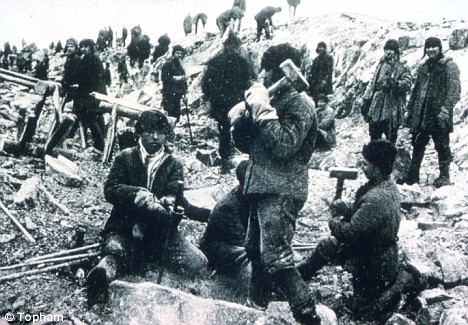
Ed West surmises that fear, or rather the loss of fear, the kind of holy fear generated in those who view art such as this with the eyes of faith, is what led to the 'brutal condition in Bolshevik Russia'. This is quite true in a sense, because then, as now, lived a generation of men who behaved as if God did not exist.

Popes down the ages have taught just as Pope Benedict XVI does, that without God, man is lost. That is not to say that man is bad, or degenerate, but that man is lost, his ability to choose goodness and reject evil curtailed and moreover his ability to distinguish between good and evil, hampered. Even the great Evangelist, St Paul, bemoaned his own sins and weaknesses in his letters, but what kind of moral blindness can lead a generation of men to enslave others in gulags and murder, so arbitrarily, thousands, millions even, in Nazi Germany or Stalinist Russia?

Are we really so bad a species that only Damascene conversions upon gazing at the Last Judgment, in 'fear and trembling' can save us from ourselves and stop us slaughtering our brothers and sisters and throwing them into mass graves? It must, surely, be a little more complicated than that, since we are, at heart, complex creatures. Oh, how mysterious we can be and indeed are!

Bolshevik Russia, like so many tyrannical and murderous regimes do, crushed religion, a key foundation stone in any society down the ages, in an attempt to raise man to the glory reserved for God alone.  In so doing, they destroyed not God, Who is Eternal, but the Mystery of Faith. They throttled the Mystery of Faith and with it they throttled their brothers and sisters.

It is almost as if in the absence of a sense of God, Who the Church proclaims to be Love, a vacuum is created in which the 'new and better World' promised by those who champion it, becomes a bloodbath of emnity, strife, division, competing ideologies and murder, as man, divorced from his Creator and left to his own egotistical ideas, bereft of the Mystery of God, searches helplessly for meaning in a cold and brutal World, a World not created, redeemed and guided by Love, but one borne out of utter chaos, whose inhabitants are governed by dread, fear and insecurity alone. For these were men who raged, not against the 'dying of the light', nor perhaps even God, since they had forgotten Him, but against themselves and each other. The Nazi ideology fared no better, reducing man to a mythological ideal grounded in racial purity. People who didn't fit in to the ideal, well, they just didn't fit in at all and we all know what the 'final solution' was.

Throughout even the torturous, bloodthirsty, savage 20th century, the Church continued to proclaim the Beatitudes, continued to proclaim the Gospel, despite the popularity of new ideologies, continued to meditate upon the Mystery of Faith and proclaimed that man had been raised to a new and glorious dignity in the light of the Risen Christ. In Our Lord Jesus Christ, man has hope, a hope that no man can rob from him, not even the pale faced man dressed in black with a big scythe. She bore many martyrs for proclaiming just that, with a host of men and women who bore witness to the dignity of the human person.

In this age, when, once more, again, high profile men and women in positions of power and influence seek to destroy the Mystery of Faith, in order to replace it with an ideology, a 'new atheism', leading to a more 'rational' World, one grounded not in 'superstition', but in 'science', genetics and cold, reductionist logic, what kind of World will, if successful, these new high priests create? A 'new and better World'? Sadly not. A World devoid of hope, a World devoid of prayer, a World devoid of love, a World that behaves as if God did not exist - that, unfortunately, is where this story ends. The 'new atheists', fashionable, popular, persuasive, are not prophets of a new and better World, but prophets of doom. We have been here before and the atheistic 'geneticists' who have flourished in the absence of a strong and united Church will make all the mistakes that the eugenicists made in Nazi Germany.

Meditating on the Last Judgment in fear and trembling may still profit a man nothing if he has no love. For it is not fear of the Last Judgment that primarily motivates the choices of those who believe, but love. It was not fear, for example, that motivated Blessed Teresa of Calcutta, nor money, nor public acclaim, but love, love of the Crucified, love of the Poor in whom she saw the Victim whose death brought her Life. In the Mystery of God, in the Mystery of Love and in loving the sick and dying, Blessed Teresa of Calcutta's soul ascended to God.

Those venerated by the Church as Saints and Martyrs and Blesseds, those known to us, entered deeply into the great Mystery of God, the Mysterium Fidei, the Mystery of Faith. Those who the Church has raised to the Altar did not know everything. Their lives were often full not of certainty, or a show of power and strength, but, more often than not, were marked with joy, love, sorrow, doubt, failure, weakness, suffering and fatigue, which entered their lives deeply. These men and women, however, are crowned and revealed by God to His Church. They saw the Mystery of God in their brothers and sisters, all of them. They lived for God, they thirsted for God, they yearned for God, they hungered for God and they allowed the Mystery of Faith to penetrate their lives, their minds and their hearts. They did not act out of fear of the Last Judgment, but out of love for the One with the power to save souls, heal broken hearts, set free those imprisoned, the One who brings light to those in darkness. They fell in love with a Mystery: the Mystery of Faith.

Say a prayer for Christopher Hitchens, dying of cancer, and all the 'new atheists' who appear to haunt the mainstream media like ghosts from ages past. Peter's brother, it seems, has spent a great deal of his life hating. He hates Pope Benedict XVI. He despised Blessed Teresa of Calcutta and one assumes, Pope John Paul II. It is all too easy for the World to hate God's chosen messengers, since their message is a hard one and their faith is baffling. They can appear contradictory, even mad. Yes, it is easy to hate these, even if they do not return your hatred but show you only love in return. They are only Christians after all. That's what the World expects them to do. It is harder, however, it is O so much harder, to hate the Man who died for the love, of you.

H/T Fr Ray Blake