Showing posts with label Clint Eastwood. Show all posts

Sunday, November 13, 2011

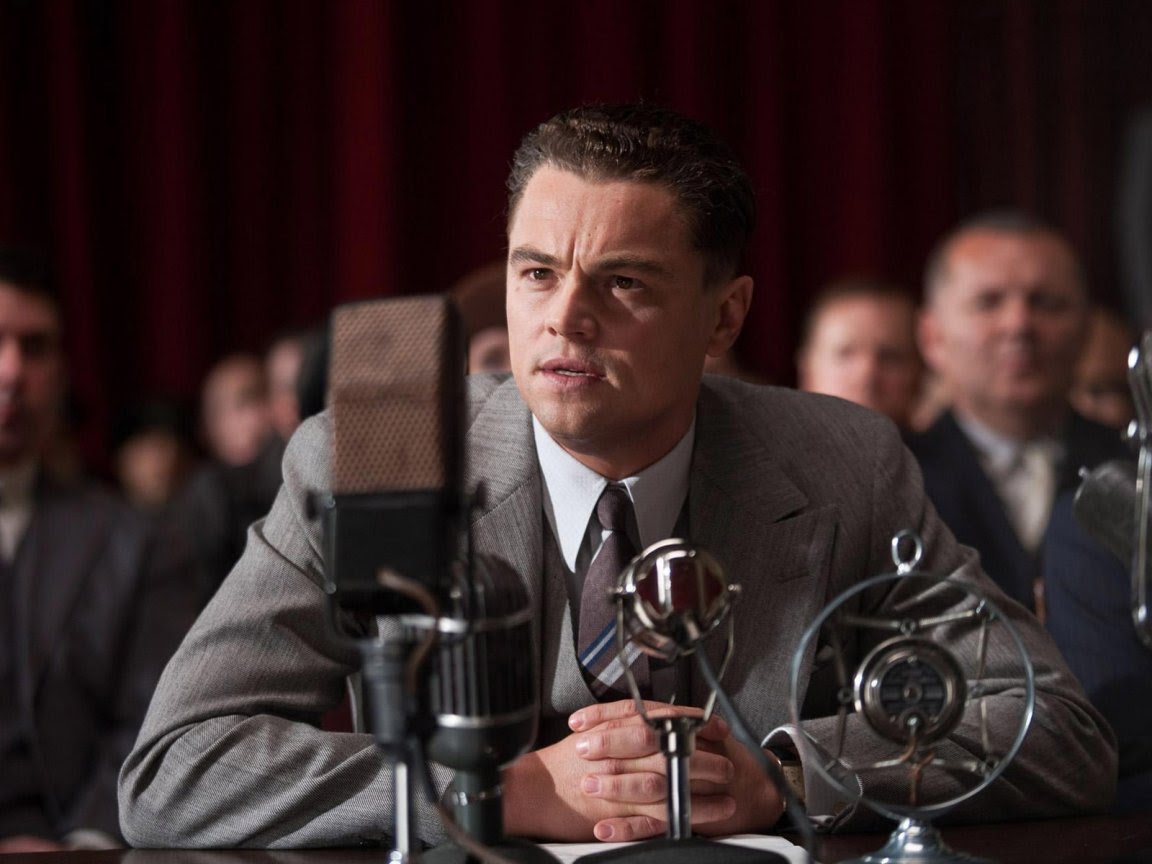
J. Edgar


Clint Eastwood's J. Edgar is an ambitious mess. The controversial founder of the FBI seems like an ideal subject for a biopic, and Eastwood was an interesting choice to direct. But the movie is a failure in almost every regard, from its slapdash storytelling to its fuzzy portrayal of the man himself.

In 1919, John Edgar Hoover (Leonardo Dicaprio) is a young Justice Department clerk. After a bomb nearly kills Attorney General A. Mitchell Palmer (Geoff Pierson), Hoover is put in charge of the Bureau of Investigation, rounding up leftists, radicals and aliens for imprisonment or deportation. Hoover is given almost unlimited power as he reshapes the Bureau into an incorruptible fighting force through impossibly high standards, scientific crime solving and canny media promotion. Hoover scores PR successes by fighting gangsters like John Dillinger and catching Bruno Hauptmann (Damon Herriman), kidnapper of the Lindbergh baby. Through it all, though, he's tormented by his relationship with number two man Clyde Tolson (Armie Hammer).

J. Edgar Hoover is a fascinating figure, and I'm surprised it took so long for a biopic to be made. Aside from Bureau-promoted propaganda (The FBI Story) and TV movies, his film appearances have been limited. Bob Hoskins' flouncy portrayal of Hoover in Oliver Stone's Nixon was an embarrassment; Billy Crudup's fierce, PR-obsessed portrayal was one of the high points of the recent Public Enemies. Now comes J. Edgar, which makes a dull, ill-judged biopic out of a fascinating man.

The primary culprit is the script. Dustin Lance Black's (Milk) handling of the Hoover-Tolson relationship is speculative but tasteful, even touching. Otherwise, the film fails. A loudly-stated "power corrupts" theme doesn't wash: the young Hoover who orchestrates the Palmer Raids is no different from the old man who squares off with Martin Luther King and Bobby Kennedy. Black's narrative flits between flashbacks, presenting different periods of Hoover's life in parallel. It's an interesting conceit but sloppily done; the film flirts with interesting ideas, but can't settle on a theme or a message. The events it focuses on (the Palmer Raids, Bruno Hauptman, Hoover's vendetta against King) are superficially treated. A facile framing device and unreliable narrator make things even worse.

More telling is what the film leaves out. Aside from the Kansas City Massacre and Hoover's staged arrest of Alvin Karpis (Manu Intiraymi), the film completely skips Hoover's war against John Dillinger and other public enemies. Hoover's massive PR campaign (appearing in films, comic books, radio shows) is only alluded to. Nothing about the FBI's anti-sabotage operations in WWII, the '50s Red Scare or Hoover's coddling of the Mafia. Joe McCarthy is improbably labeled an "opportunist" ("Thank God somebody is doing it!" was the real Hoover's assessment). Of all the Presidents Hoover served under, we only encounter Richard Nixon (an oddly-coiffed Christopher Shyer).

I don't think these are history buff complaints; these are key parts of Hoover's life and career. Watching Hoover's interactions with Presidents, or how he came to view Martin Luther King as no better than Emma Goldman, would have given us more insight into his character, how he became so powerful and why he was so feared. Obviously Eastwood couldn't cover every aspect of Hoover's long career, but the focus is so slipshod, its handling of what it does address so shallow, that this justification doesn't watch. J. Edgar bites off more than it can chew, covering too much and too little at the same time.

Technically the film isn't very interesting either. Eastwood is an assured director but the film's mis-en-scene is monochrome and bland, the staging of key set pieces rote, the score dull. While never quite boring, the film's slow pace and choppy narrative don't generate much interest either.

I was very skeptical of Leonardo DiCaprio's casting but he pulled it off. Dicaprio nails Hoover's self-righteous rigidity, pettiness and repression, and even in old-age makeup he's convincing. But like so much else, he's done in by the script, which allows Hoover little depth or development over 50 tumultous years. This is no fault of DiCaprio, but a screenplay which can't come to grips with its subject.

Armie Hammer (The Social Network) is excellent, mixing moral uprightness with affection for Hoover. Hammer is definitely a comer and this role might net him an Oscar nod. The rest of the cast is wasted. Judi Dench has some nice scenes as Hoover's mom but Naomi Watts's secretary is one-note. The supporting cast has a lot of interesting names but few make an impression. Jeffrey Donovan's (Changeling) testy Robert Kennedy and Stephen Root's (The Conspirator) wood expert make the most of brief screen time, but Dermot Mulroney, Josh Lucas, Geoff Pierson, Ken Howard (Rambo) and Lea Thompson (Howard the Duck) don't register.

J. Edgar feels like a missed opportunity. A movie that had a better sense of who Hoover was could have been a masterpiece. Instead we've got this messy biopic that has little to say about its subject beyond his sexuality. Pity.

Wednesday, September 21, 2011

Up Next: Shia LaBeouf as Abraham Lincoln!


In this post last week, I said that Clint Eastwood's J. Edgar might be my most anticipated film of the fall. To be fair though, I'd also said that I was waiting for the trailer before making a judgment.

Well, here's the trailer... and it's not pretty:

http://www.youtube.com/watch?v=vD99zwj-ZUg

I like Leonardo DiCaprio well-enough as an actor but he just seems wrong for this part. His attempts at imitating Hoover's voice and mannerisms come off as phony, like, well, Leo DiCaprio doing a Hoover impression. The phony looking old-age makeup doesn't help either.

Of course, it's possible that his actual performance, in context, will be great. After all, Anthony Hopkins didn't look or sound anything like Richard Nixon but he gave a brilliant portrayal of Tricky Dick. But on the other hand, isn't a trailer supposed to make you want to see a movie? Color me skeptical.

This weekend I'll be seeing either Drive or Moneyball, depending on what my mood. I'm assuming neither of them won't have a big star badly miscast as an iconic historical figure. You can also expect a few classic reviews in the near-future if time permits.

Sunday, August 28, 2011

Unforgiven


Unforgiven (1992) stands as a seminal work in the Western genre. Easily the high point of the '90s Western boom, it's also Clint Eastwood's finest directoral effort.


Delilah (Anna Levine), a prostitute in Big Whiskey, Montana, is mutilated by a pair of cowboys (Rob Campbell and Anthony James) who go unpunished by Sheriff Little Big Daggett (Gene Hackman). Her colleagues, led by Strawberry Alice (France Fisher), raise money to avenge Delilah. Notorious (but retired) gunslinger Will Muny (Clint Eastwood) is coaxed by cocky bounty hunter The Schofield Kid (Jaimz Woolvett) to collect the bounty. Will and partner Ned Logan (Morgan Freeman) think their violent days are past, but their mission and several run-ins with Little Bill causes the old, murderous Will to resurface.


The aged gunslinger who can't escape his past is one of the Western's oldest tropes. Henry King's The Gunfighter (1950) probably remains the best, with Gregory Peck's attempts at retirement sabotaged by fame-seeking "squirts." Variants have cropped up in Shane, Man of the West, The Shootist and Sam Peckinpah's Westerns, and Eastwood touched on theme himself in The Outlaw Josey Wales. What Unforgiven lacks in originality, however, it more than makes up for in craftsmanship.


Unforgiven is perhaps the ultimate revisionist Western. Eastwood and writer David Webb Peoples deconstruct every Western convention imaginable, with its sadistic Sheriff, bloodthirsty whores and protagonists who can't shoot straight. The violence is blunt and personal: a grisly whipping, Little Bill's savage beatings, a gutshot cowboy's slow, painful demise. A subplot with flamboyant gunslinger English Bob (Richard Harris) and a hack novelist (Saul Rubinek) allows Eastwood to explore (and explode) the gunfighter myth: Unforgiven's desperados are either bigmouth braggarts, haunted killers or outright psychopaths.


Unforgiven is an unusually character-rich Western, a genre that typically deals in archetypes. "Cured" by his deceased wife, Will tries to divorce himself from his younger days ("I ain't like that no more!"). But when he starts swilling whiskey and violently squinting, it's only a matter of time until the bullets start flying. Little Bill is a superb villain: a charming paterfamilias building himself a crooked house, he turns into a sadistic bully at the sight of an "assassin," a savage rebuke to the "law and order" mentality of oaters like Tombstone. The loudmouthed Schofield's character arc is predictable, but the guilt-ridden Ned, theatrical English Bob and hateful Strawberry Alice all make vivid impressions.


Revisionist Westerns that focus solely on "printing the fact" usually misfire (The Culpepper Cattle Company) but Unforgiven gets almost everything right. Eastwood cannily pitches the film at two levels, appealing both to the Cahiers crowd and the Clint fan. The anti-violence themes and Western deconstruction inspire reflection, but the well-crafted story and well-drawn characters make it more conventionally enjoyable. Some critics feel the finale, with Clint reverting to Man With No Name mode, undercuts the pacifist message, but a Shootist-style ending wouldn't pay off as well dramatically.


Clint Eastwood is one of Hollywood's most self-reflective film makers. While he made his name playing macho action heroes like the Man With No Name and Harry Callahan, he's used his directoral efforts to deconstruct these heroes. In High Plains Drifter, the squinty-eyed drifter became a sadistic rapist; in The Outlaw Josey Wales, his vengeful protagonist is drawn into settling down with a surrogate family. Unforgiven marked his transition from action director to auteur, his post-'92 output a glut of "serious" films that are critically acclaimed but mixed in quality.


On both sides of the camera, Eastwood has never been better. The film is incredibly beautiful, with Jack N. Green's photography of Canadian locations an appropriately autumnal feel, and despite several long digressions the story flows smoothly. (Eastwood also contributed Claudia's Theme, a simple but poignant guitar piece that forms that backbone of Lennie Niehaus's score.) His acting is even more impressive: usually a ruggedly impassive screen presence, Clint puts real emotion and anguish into Will Muny, making him more credible and sympathetic than all of his previous protagonists.


Gene Hackman makes an appallingly fascinating villain, capturing both Little Bill's charm and repugnance. Morgan Freeman has never been better, and Richard Harris's (Major Dundee) exuberant character almost steals the show. Ferocious Frances Fisher and meek Saul Rubinek (Nixon) give career-best turns. Only Jaimz Woolvett's callow greenhorn strikes a false note.


Unforgiven probably remains the best Western since the genre's heyday in the late '60s/early '70s. Certainly it's Clint Eastwood's finest hour as a director. And unquestionably, it's one of those relatively rare films that seemlessly combines entertainment and artistry.

Thursday, May 19, 2011

The Outlaw Josey Wales


The Outlaw Josey Wales (1975) is a sprawling Western that isn't the sum of its parts. It's definitely on a list with Rio Bravo and The Magnificent Seven as a Western with lots of great scenes, but that doesn't quite come together.

Josey Wales (Clint Eastwood) is a Missouri farmer who watches his family get massacred by Captain Terril's (Bill McKinney) Unionist "redlegs." Josey joins a Confederate guerilla band and refuses to surrender when the war is over, thus avoiding the massacre of his old unit. Josey escapes the carnage and is trailed by Terril and Fletcher (John Vernon), Josey's old commander whose dragooned into serving. Josey winds up in Texas, where he runs into fugitive Indian Lone Watie (Chief Dan George), a family of Jayhawkers and an ever-present hound and begins to consider settling down. However, he still has to settle old scores with Terril.

Josey Wales is more ambitious than Eastwood's previous Western, High Plains Drifter, with an epic scope and broader thematic concerns. However, the film suffers from a rambling story. The narrative doesn't gel and it lurches from scene to scene without flow or focus. Things really go off the rails when Josey meets up with the Jayhawkers. The film tries to play up themes of Josey rebuilding his shattered family, but it's not really interesting when the family is so obnoxious; you'll almost be cheering for the Redlegs at film's end.

What does work are individual scenes, and there are plenty of gems for Western fans. Eastwood's single-handed rescue of Laura Lee (Sondra Locke) from lecherous Comancheros rivals Sean Connery's swordfight on the beach in The Wind and the Lion for unbridled macho badassery. Josey's parlay with Indian chief Ten Bears (Will Sampson) is sensitive and affecting, as, in a different way, is his confrontation with John Davis Chandler's squirrely bounty hunter ("Dyin' ain't much of a living"). The film's sardonic sense of humor is also a plus, with Clint spitting tobacco every which way and Lone Watie providing a stream of funny wisecracks.

Clint the actor is in top form. Josey is a lot more talkative than the Man With No Name and even deadlier: with his half-dozen pistols and Gatling Gun prowess he's a walking weapons platform. However, he's also a more complex character, a bitter man reluctantly attracted to the prospect of regaining his old life, but unwilling to give up his revenge. Clint's understated acting style and self-effacing sense of humor serves the character perfectly, and this might be his best performance.

The supporting cast is mixed. John Vernon (Dirty Harry) is the standout, making Fletcher believably tortured by his predicament. Chief Dan George essentially reprises his role from Little Big Man, and is just as amusing. Will Sampson (One Flew Over the Cuckoo's Nest) makes Ten Bears one of Hollywood's most interesting Indian chiefs. However, the useless Sondra Locke and obnoxious Paula Trueman stink up the second half. Bill McKinney (The Parallax View) makes a disappointing, one-dimensional villain. Len Lesser (Kelly's Heroes), John Davis Chandler (Ride the High Country) and John Mitchum play various bounty hunters, and Matt Clark (Jeremiah Johnson) and Royal Dano (Man of the West) turns up towards the end.

The Outlaw Josey Wales is a good film that achieves a level of mythic grandeur. However, its too flawed in plotting and pacing to be an all-time classic.

Sunday, April 10, 2011

High Plains Drifter


High Plains Drifter (1973) was Clint Eastwood's first Western as a director. It's a rather curious film, strong in moments and unsettling atmosphere but not entirely successful. Of all the post-Sergio Leone American Westerns, this is probably the closest in look and feel to a Spaghetti Western.

A mystery man known only as The Stranger (Clint Eastwood) rides into Lago, an isolated mining town with a nasty secret. The Stranger eradicates a gang of local toughs and rapes bad girl Callie (Marianna Hill) within ten minutes of arrival. The wimpy townspeople learn that psychotic outlaw Stacey Bridges (Geoffrey Lewis) has been sprung from jail, and enlist The Stranger to protect them. The Stranger's price is high - complete authority over the town - and his actions humiliate the people of Lago: appointing the dwarf Mordecai (Billy Curtis) Sheriff, taking the hotel for himself, bedding both Callie and hotel manager's wife Sarah (Verna Bloom), repainting the town red and renaming it Hell. Flashbacks and dialogue hints indicate the Stranger might be something more than human, as appears to be the case when Bridges's gang rolls into town.

High Plains Drifter borrows liberally from any number of Westerns. Besides being a cynical inversion of High Noon and cribbing its plot from Bad Day at Black Rock, it closely resembles a rather bizarre Spaghetti Western, Django the Bastard, with its ghostly gunfighter and revenge plot. Eastwood uses this familiar set-up to send up a variety of Western tropes. The Stranger is no Will Kane, leaving the cowardly townspeople to their fate and allowing the nastier ones to get weeded out before striking back. And Clint turns on his own Man With No Name persona, making him not only a stone-cold killer but a rapist as well.

High Plains Drifter works in moments, with a number of striking images and individual scenes, but it's not quite a cohesive whole. The plot is rather thin and the film struggles to build dramatic tension as the showdown approaches. The townspeople are uniformly scummy and greedy, and none of them are even interesting in their depravity. The women characters are a rather obnoxious macho fantasy; Callie's a straightforward slut and even the slightly more sensitive Sarah is eager to bed The Stranger. The flashback is played twice in full, somewhat diluting its initial impact. And if The Stranger is indeed a ghost, then why is the self we see in flashbacks played by a different actor?

But the sequences that work definitely work. The beginning, with the Stranger materializing out of a mirage, is an inspired visual. The movie has a uniquely nasty atmosphere, helped by Bruce Surtee's hazy photography, Henry Bumstead and George Milo's inspired art direction and Dee Barton's warped electronic score. Images like the red-painted buildings and the POV shots of the Marshal being whipped to death are both horrific and captivating. And the final showdown, with The Stranger using a bullwhip to wreak vengeance on the bad guys, is genuinely grisly and nightmarish.

Clint Eastwood takes his Man With No Name persona to the extreme, making him a far nastier and loathsome character than in his Leone films. The rest of the cast doesn't register much. Marianna Hill (The Godfather Part II) and Verna Bloom (Animal House) get cheap and degrading characters, and the gaggle of townspeople are interchangable. The only bright spots in the supporting cast are Billy Curtis (The Terror of Tiny Town), hilariously off-beat and vulgar as Mordecai, and the always-reliable Geoffrey Lewis (The Wind and the Lion) playing a psychotic villain.

High Plains Drifter is an odd Western that's not a complete success. Still, it's unsettling and creative, and is definitely worth a look for Clint fans.

Thursday, January 20, 2011

Clint Eastwood to direct... A Star is Born!?!


If needed your mind blown by complete randomness today, this should suffice:

EXCLUSIVE: Clint Eastwood To Direct Beyoncé In Musical Of 'A Star Is Born'

By NIKKI FINKE | Thursday January 20, 2011 @ 3:46pm PST


This is a real shocker, and not just Hollywood but the rest of America should love it. What a coup for Warner Bros getting The Man. Of course, Clint Eastwood wiIl produce as well as direct the script by Will Fetters along with producers Billy Gerber and Jon Peters (who made the infamous 3rd version of A Star Is Born with Barbra Streisand and Kris Kristofferson). No male lead is cast yet, but the possibilities are endless. The project, which has been at WB for several years, had hoped to pair Beyoncé and Will Smith. But how about P Diddy (who's turning into a surprisingly fine actor along with Beyoncé's husband Jayz), Eddie Murphy (reteaming with Beyoncé after Dreamgirls), or any white guy imaginable though Robert Downey Jr and Jon Hamm are names that have been floating? Of course, Clint has had a huge interest in music on screen (remember him as a jazz DJ in Play Misty For Me?), directing Bird, doing all his own scores for his movies and even received an Avademy Award nomination for one of them. Then again, I'm one of thise huge fans who thinks Clint can do anything. And Beyoncé scored big at the box office in Sony/Screen Gems' Obsession. The idea is to start shooting in the Fall.

The idea of a 4th version of A Star Is Born has been floating around for some time now. Even this pic fell apart and just came back together. Back in January, Deadline repported that Nick Cassavetes was in early talks with Warner Bros to direct an updated version of the well-worn story of a love affair between an alcoholic star on the way down, and a young artist on the rise.

There have been a trio of A Star Is Born versions made since the 1930s, the last one coming in 1976 with Kris Kristofferson playing the boozy singer and Barbra Streisand the ingenue. Or even 4 if you consider What Price Hollywood (1932) made by George Cukor and is often forgotten since the film was remade successfully so many times.

Next: Michael Mann to helm a My Fair Lady remake starring Lady Gaga!

Sunday, November 21, 2010

Dirty Harry's Dregs

Yes, Clint Eastwood afficianados and fans of police brutality, Harry Callahan is back, older and feistier than ever, for two more adventures! Today we'll be doing a double-barreled review of the final two Dirty Harry flicks, Sudden Impact and The Dead Pool. Neither will be winning any Oscars, but one's fun and the other is terrible. Which is which may surprise you.

Sudden Impact (1983, Clint Eastwood)


Sudden Impact is the absolute nadir of the Dirty Harry series. Even with Clint himself at the helm, Harry's four go-around is really something awful, a nasty, dull and tiresome flick with little to commend it but grisly violence and a few one-liners.

In this go-around, Harry is put on forced vacation after he literally scares a Mob boss (Michael V. Gazzo) to death. Harry is dragooned into helping the small town of San Paolo investigate a serial killer, and immediately butts heads with the local authorities. He also falls for local artist Jennifer Spencer (Sondra Locke), who is quite obviously the serial killer and why bother to pretend it's a mystery?

Sudden Impact is a boring and tired film, no doubt reflecting Clint's own growing disinterest in the series. The script slavishly follows the series conventions, with Harry busting up a robbery, dispensing pithy quotes, losing an expendable partner (Albert Popwell, having renounced his criminal ways) and sparring with testy superiors. The plot is thoroughly predictable, with Clint borrowing Sergio Leone-style flashbacks and the mirror-shooting bit from Pat Garrett and Billy the Kid. And don't get me started on the godawful ending, which wouldn't have passed muster on Walker, Texas Ranger.

Clint's direction is lazy, with boring camera work and by-the-numbers action: his heart clearly isn't in the film. The only creative action scene is an amusing bit where Harry pursues a criminal by driving a bus full of bloodthirsty seniors. He also amps up the violence and sadism: the rape flashbacks are shown at length, our killer gets her jollies shooting people in the balls, and Clint repeatedly punches out a nasty lesbian (Audrey J. Nienan) for laughs. Lovely.

Clint is in fine form in front of the camera, as always: His "Go ahead, make my day!" remains one of the all-time great movie lines. Unfortunately, he surrounds himself with a gaggle of horrible supporting actors, who take up way too much screen time with haphazard ham. All of them are just plain bad, with a special shout-out to Sondra Locke, Clint's partner of the time. The girl is unattractive and thoroughly untalented, and is a blight on every film Clint shoe-horned her into. So it is here, 'twas ever us.

The Dead Pool (1988, Buddy Van Horn)


Harry's final outing is miles better. The Dead Pool is no less derivative of its predecessors than Sudden Impact, but it's far more palatable due to a welcome injection of self-parody. Hey, when you're fifty-eight and still playing a two-fisted action hero, you'd better be able to poke fun at yourself.

This time, Harry finds himself placed in a "dead pool" list of celebrities betted on by a group of ghoulish gamblers. Harry doesn't take kindly to this, and his investigation initially leads him to arrogant film director Peter Swan (Liam Neeson), whose star (Jim Carrey) died in mysterious circumstances - and whose list matches the pattern of killings. Harry must avoid this new killer along with the thugs of another Mob boss (Anthony Charnota) while romancing pretty reporter Samantha (Patricia Clarkson).

The Dead Pool avoids being another tired rehash through Steve Sharon's witty script, which plays most of its material for laughs. The film is effectively a ninety-minute pisstake, with Harry going through the motions with a clever wink and nod. In one of the funniest action scenes ever, Harry and his partner are chased around San Francisco by a remote control car! Whether that's awesome or awful, I leave for you to decide. Other scenes have Harry intimidating an incarcertated gangster with a well-muscled inmate (Diego Chairs), and brandishing a harpoon (!) at film's climax. The puerile and hypocritical attacks on media violence are easy to ignore in the overall spirit of fun.

Clint's getting up there in years but he's as feisty as ever. As Clint would continue to play variants of Harry for years to come (The Rookie, In the Line of Fire, Gran Torino), it's nice to see him practice self-deprecation. He's backed by a good supporting cast, for once: Evan C. Kim is easily Harry's most likeable partner, Patricia Clarkson (The Untouchables) makes a charming love interest and Jim Carrey shines in a pre-stardom bit part. Liam Neeson (Batman Begins) plays a boring jerk director and David Hunt's (TV's Everybody Loves Raymond, oddly enough) psycho is equally one-note.

Saturday, February 21, 2009

Gran Torino


After my viewing of Benjamin Button I've taken a lengthy sabbatical away from theater-going - six new releases in three weeks plus the accompanying food and other expenses was quite draining of finance, plus I am sort of going to school. This weekend I finally got to see Clint Eastwood's Gran Torino, the second film of the year after the solid if overlong and cliched Changeling. I had been leery of seeing this film, but the prospect of seeing Clint Eastwood, one of cinema's greatest icons (and my favorite movie stars), on the big screen for possibly the last time was too much to pass up. And I was pleasantly surprised. If this is indeed Clint's last acting job, he couldn't have picked a better vehicle to go out on (get it? Hehe).

Walter Kowalski (Eastwood) is an angry, embittered old man. He's watched his wife pass away, most of his friends move on or die, and his neighborhood overrun by minorities, particularly Hmong refugees from Indochina. Kowalski soon finds a purpose in life when he accidentally saves Hmong boy Thao (Bee Vang) from a gang of thugs - which makes Walter a hero in the community. Walter reluctantly takes Thao under his wing and quickly bonds with him, and becomes endeared of his sister Sue (Ahney Her). But after the gang launches a savage attack on Thao and Sue, Walter decides that he needs to deal with the gang to save his new friends and redeem himself.

Gran Torino is more than a simple "cranky racist guy learns the error of his ways" story. True, it's a story of redemption, but it's a lot more than that. It succeeds on a number of levels, from its dramatic plot to humor to commentary on the changing nature of American society, but primarily works because of Mr. Eastwood.

The movie is an epic tragedy centered around a remarkably comic film. The movie does a nice job of playing with the usual cliches; Walter is snarling, growling, foul-mouthed old bigot who does little more than sit around and drink beer all day. The movie has a lot of fun with its inherent plot points and cliches; the film makes use of the predictable plot and character arcs without being preachy and having a lot of fun with the conventions. The ads may not indicate as much, but this is a very funny movie, and if it weren't for the subplot with the Hmung gang-bangers, this could very easily work as a comedy, however dark.

The film is very well-directed, in the typical Eastwood fashion; minimalist, but powerful when and where necessary. The Hmong actors, particularly Ahney Her as Sue, do a fine job - not Oscar-worthy, but more than adequate and certainly better than most reviewers have given them credit for. The rest of the cast is pretty one-note but with Clint as such a strong center it's not much of a flaw.

Clint Eastwood is of course the primary reason to see this movie. He proves that he can still be a real badass and deliver a powerful performance. Clint has never showed any problems with poking fun at his age, and he does a real number on himself here. He utilizies his usual trademarks - his scowl, raspy voice, quickness with a gun and spitting - to create a picture of a tough guy who watched the world pass him by. If this is to be Clint's final bow before the camera, as he's suggested, it's an absolutely perfect one. His final confrontation with the gang is an absolutely perfect way to go - it's up there with John Wayne's final showdown in The Shootist as the greatest star exit in cinema history. And for that alone, the movie is worth watching.

In short, Gran Torino is an excellent film. It has the perfect balance of humor and elegiac sadness to make it work, and is a perfect final bow for one of cinema's greats.

Oscars are tomorrow - I'm not sure if I'm doing anything special, but I'll at least make a note of it. Go Slumdog Millionaire!

Rating: 8/10 - Highly Recommended

Saturday, November 8, 2008

Changeling


Changeling is Clint Eastwood's latest film, and it's a remarkable piece of work. While it has a few minor flaws, it's an entertaining, thoughtful and gripping movie throughout. More than anything else, its stark empathy is what makes it a memorable cinematic experience.

The film follows the true story of Christine Collins (Angelina Jolie), a middle-aged single mother who is raising her young son Walter (Gattlin Griffith) in 1920's LA. Everything is picture-esque until Christine returns home from work one night to find Walter missing. After several months of investigation, the Los Angeles Police find a 12 year old boy (Devon Conti) whom they return to Christine - but Christine immediately recognizes that it isn't her son. The embattled police, particularly Captain James (Jeffrey Donovan), fighting charges of corruption and brutality, stonewall Christine's own investigation, ultimately committing her to a mental institution. As Christine fights for freedom and justice, a seemingly unimportant tip leads Police Investigator Lester Ybarra (Michael Kelly) onto the trail of a serial murderer Northcutt (Jason Butler Harner) who may be responsible for Walter's death. For Christine, it's simply finding out the truth about her son, but the Police and LA authorities find their reputation on the line, and will do anything to save their reputations - particularly in the face of crusading priest and radio host Gustav Brieglieb (John Malkovich) and flamboyant attorney S.S. Hahn (Geoff Pierson).

Changeling is an effective film throughout, if for no other reason then it inspires strong feelings of empathy and involvement; it's gripping, for lack of a better word. Christine is a normal woman thrust into the most nightmarish situation imaginable: her child gone, replaced with a stranger, then betrayed, mocked and arrested by those she should be able to trust most. The movie makes the establishment villains broad, mean and vicious (while curiously painting our child-killing sadist as a somewhat sympathetic figure); perhaps a bit too mean to be realistic, but mean enough to be convincingly frightening. Not since Nurse Ratched has an abusive authority figure been so nasty or sadistically domineering as these assholes. Just watching them try to explain away Christine's suspicions is disturbing in and of itself, let alone her forced stay in the mental hospital, where her doctor in charge (Denis O'Hare) offers her a choice: accept the police's official story (and a stranger as her son), or drastic treatment. That Captain Jones could have Christine locked in a mental institution without a warrant or even informing her family and friends is an extremely disturbing abuse of power. Granted, it isn't the most subtle movie you could see (and the actual issue of police corruption and ineptitude is largely skimmed over), but as a piece of intelligent entertainment, it's quite striking. Painting in such broad strokes may have some detrimental effects, but it has the benefit of drawing the viewer into the story and making the stark terror of Christine's plight seem very real.

Technically, the movie is sound. Although the washed-out color palette is a bit tacky, Eastwood gives solid, minimalist direction throughout. He allows the actors enough breathing room to put their own spin on them, and utilizes cinematography and editing beautifully. He also contributes a minimalist musical score which underscores the futility and desperation of the film. The period detail is picture-perfect, creating a nice sense of realism. It isn't the most accomplished film you'll ever see, but it's done well-enough, beyond any real criticisms.

The one thing I will fault the movie is its length. It seems a common malady in films nowadays that the director, editor, whoever is responsible seems unable to know when to end a perfectly good film. This is a textbook example: the movie should have ended with the trial, but instead we go on to see Christine's further confrontation with Northcutt, his execution, and her continued search for her son. And what do we get out of the additional material? An open-ended conclusion, basically marking everything after the trial as little more than pointless. I might also add that the subplot with the child killer is given perhaps too much screentime; given the overall theme and arc of the movie, wouldn't it have made more sense to show more of the LAPD's corruption? The movie could easily have been shorn fifteen minutes or so to no detriment, but that this is the worst that can be said of the movie says a lot in and of itself.

Angelina Jolie is simply marvelous. I've never been a big fan of hers, but with the right material she has shown herself to be a more than capable actress. Virtually unrecognizable, she sheds her usual sex kitten persona and becomes convincing as an Everywoman mom who finds herself in a living nightmare. This is truly a remarkable performance, and if Jolie doesn't garner at least a nomination for her work here, then the Academy seriously needs to get fucked.

The supporting cast, made up of largely unknown character actors, is mostly solid. John Malkovich doesn't have a lot to work with, but he does well cast against type as the crusading preacher. Jeffrey Donovan, Colm Feore and Denis O'Hare acquit themselves brilliantly as the gallery of hissable, contemptable villains, and Amy Ryan's small role as Christine's asylum colleague is wonderful. Geoff Pierson's dramatic cameo as the defense attorney and Michael Kelly's sympathetic cop are nice tertiary characters, while the film's child actors - particularly Eddie Alderson as the killer's accomplice - give remarkably strong performances. Jason Butler Harner is a bit hammy as the child killer Northcutt, but it's not enough of a flaw to detract from the film.

Although overlong, a bit slow and a bit cliched, Changeling is a mostly enjoyable and gripping movie. It sure beats the last turd I went to see in theaters, and is probably the best film I've seen in theaters since Charlie Wilson's War in January. Mr. Eastwood's new film gets an 8/10 and a whole-hearted recommendation from me.

Rating: 8/10 - Highly Recommended